Essential Tips for Maintaining Your Floral Arrangement the Right Way

Flowers brighten any space, but their beauty fades quickly without proper care. Many people struggle to keep their floral arrangements fresh and vibrant for more than a few days. The good news is that simple daily habits can extend the life of your flowers significantly. By adding water daily, changing the water every few days, and keeping your arrangement in a cool place away from direct sunlight, you can enjoy your blooms longer and keep them looking their best.
This guide will walk you through practical steps to maintain your floral arrangement the right way, helping you get the most out of your investment in fresh flowers.
Why Proper Care Matters for Floral Arrangements
Fresh flowers are living plants that continue to consume water and nutrients after being cut. Without proper care, they quickly wilt, lose color, and drop petals. The main factors that affect their longevity include:
Water availability: Flowers need constant hydration to stay fresh.
Clean water: Dirty water breeds bacteria that clog stems and shorten flower life.
Temperature: Heat speeds up water evaporation and flower aging.
Light exposure: Direct sunlight can cause flowers to dry out and fade faster.
Understanding these factors helps explain why daily watering, regular water changes, and a cool, shaded location are essential.
Add Water Daily to Keep Flowers Hydrated
One of the simplest yet most effective ways to maintain your floral arrangement is to check the water level every day and add fresh water as needed. Flowers absorb water continuously, and the water level can drop quickly, especially in warm rooms.
Tips for daily watering:
Use room temperature water to avoid shocking the flowers.
Fill the vase enough to cover the stems by at least 2 inches.
Avoid overfilling to prevent water spillage and bacterial growth.
If your arrangement includes foam (like in some bouquets), ensure the foam stays moist.
By keeping the water topped up, you prevent the stems from drying out, which helps flowers stay firm and vibrant.
Change the Water Every Few Days to Prevent Bacteria
Even with daily watering, the water can become cloudy and filled with bacteria after a few days. Bacteria block the stems’ ability to absorb water, causing flowers to wilt prematurely.
How to change the water properly:
Remove the flowers gently from the vase.
Empty the old water and clean the vase thoroughly with warm, soapy water.
Trim about half an inch off the bottom of each stem at a 45-degree angle to improve water absorption.
Refill the vase with fresh, room temperature water.
Add flower food if available, or a homemade mix of sugar and a few drops of bleach to slow bacterial growth.
Changing the water every 2 to 3 days keeps the environment clean and supports longer-lasting blooms.
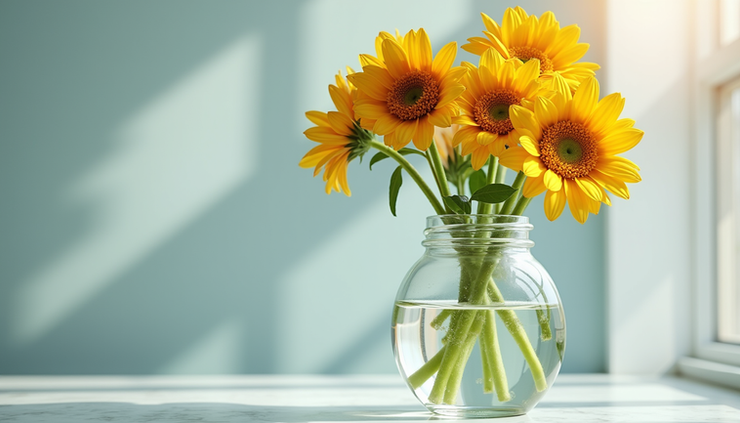
Fresh water in a clear glass vase helps flowers stay hydrated and vibrant
Keep Your Arrangement in a Cool Place Away from Direct Sunlight
Temperature and light play a big role in how long your flowers last. Heat causes water to evaporate faster and speeds up the flowers’ natural aging process. Direct sunlight can dry out petals and leaves, leading to browning and wilting.
Best placement tips:
Choose a cool spot in your home, ideally between 65°F and 72°F (18°C to 22°C).
Avoid placing flowers near heat sources like radiators, ovens, or electronics.
Keep flowers out of direct sunlight, especially during the hottest parts of the day.
Avoid drafts from open windows or air conditioners, which can dry out flowers.
By controlling the environment, you slow down the flowers’ metabolism and keep them fresh longer.
Additional Tips to Extend the Life of Your Floral Arrangement
Beyond watering, changing water, and placement, a few extra steps can make a difference:
Remove wilted or dead flowers promptly to prevent decay from spreading.
Use clean tools when trimming stems to avoid introducing bacteria.
Avoid overcrowding in the vase so each stem gets enough water.
Mist the flowers lightly with water to keep petals hydrated, especially in dry climates.
Use flower food packets that often come with bouquets, or make your own with sugar and lemon juice.
Common Mistakes to Avoid When Caring for Flowers
Knowing what not to do is just as important as knowing what to do. Here are some common errors that shorten flower life:
Using cold or hot water instead of room temperature water.
Forgetting to change the water regularly.
Placing flowers in direct sunlight or near heat sources.
Not trimming stems before placing flowers in water.
Leaving leaves submerged in water, which promotes bacterial growth.
Avoiding these mistakes will help your floral arrangement stay fresh and beautiful.
How to Trim Stems Correctly for Better Water Absorption
Cutting stems properly is a key step often overlooked. When flowers are cut straight across, the stem can sit flat on the bottom of the vase, blocking water uptake.
Proper trimming technique:
Use sharp scissors or pruning shears.
Cut stems at a 45-degree angle to increase surface area.
Trim about half an inch to one inch off the bottom.
Re-cut stems every time you change the water.
This simple step improves water flow and keeps flowers hydrated.
Signs Your Floral Arrangement Needs Attention
Knowing when your flowers need care helps you act quickly to save them. Look for these signs:
Water level is low or water looks cloudy.
Petals start to droop or wilt.
Leaves turn yellow or brown.
Stems feel slimy or soft.
If you notice any of these, refresh the water, trim the stems, and move the arrangement to a cooler spot.
Final Thoughts on Caring for Your Floral Arrangement
Taking care of your floral arrangement does not require complicated steps or expensive products. The key is consistent attention: add water daily, change the water every few days, and keep your flowers in a cool, shaded place. These simple habits can extend the life of your flowers by several days or even weeks.


Comments